 Michael Hardin
Key Takeaways
- Neptune front-load washers built from 1997 to 2004 trap moisture, detergent residue and lint behind the door seal, which feeds mold.
- Models begin with MAH, and stackable laundry centers begin with MLE or MDE; the label is on the door jamb.
- Leaving the door ajar after every cycle and running a monthly hot-water cleaning cycle are the two habits that matter most.
- Excess suds leave residue that feeds mold, so use HE low-sudsing detergent and measure it.
- When mold has penetrated the gasket material, the gasket should be replaced rather than cleaned again.
The Bottom Line
Leave the door open, clean the gasket monthly and keep detergent to the HE amount. If the smell returns after a thorough cleaning, replace the door gasket.
Maytag Neptune washer mold prevention is a narrower subject than general washer care, because the Neptune was a particular front-load design with a particular weakness: a rubber door seal and a gap behind it that hold water after every load. If you own one, or have inherited one with a house, the routine below matters more than it would on any top-load machine.
| Task | How often | What it prevents |
|---|---|---|
| Leave the door ajar after each load | Every cycle | Trapped moisture in the drum and gasket |
| Wipe the door gasket with a microfiber cloth | Monthly, or when it smells | Mold and mildew colonies in the folds |
| Run a hot-water cleaning cycle | Monthly | Detergent residue that feeds mold |
| Use HE low-sudsing detergent, measured | Every load | Excess suds left behind in the tub |
Why Do Maytag Neptune Washers Grow Mold?
Because the rubber door gasket and the space between the outer tub and the door boot trap moisture, detergent residue and lint after every wash cycle. Without ventilation and routine cleaning, that damp, closed environment supports rapid mold and mildew growth, and the odor then transfers to the laundry.
This was not an isolated complaint. Our safety notice records that Neptune front-loaders produced between 1997 and 2004 were prone to chronic mold and mildew inside the door seal and tub, and that a nationwide class-action settlement was reached in 2005. It also notes that door latch, wax motor and motor-control board failures were documented in many units, and that standing water from those faults could speed up the growth.
- The gasket fold holds a ring of water at the bottom after the final spin.
- Detergent residue coats the drum and the seal, and gives the mold something to live on.
- A closed door seals the damp air in, so the drum never dries out.
- A failing drain or latch component can leave water standing in the tub between loads.
Which Washers Count as a Neptune?
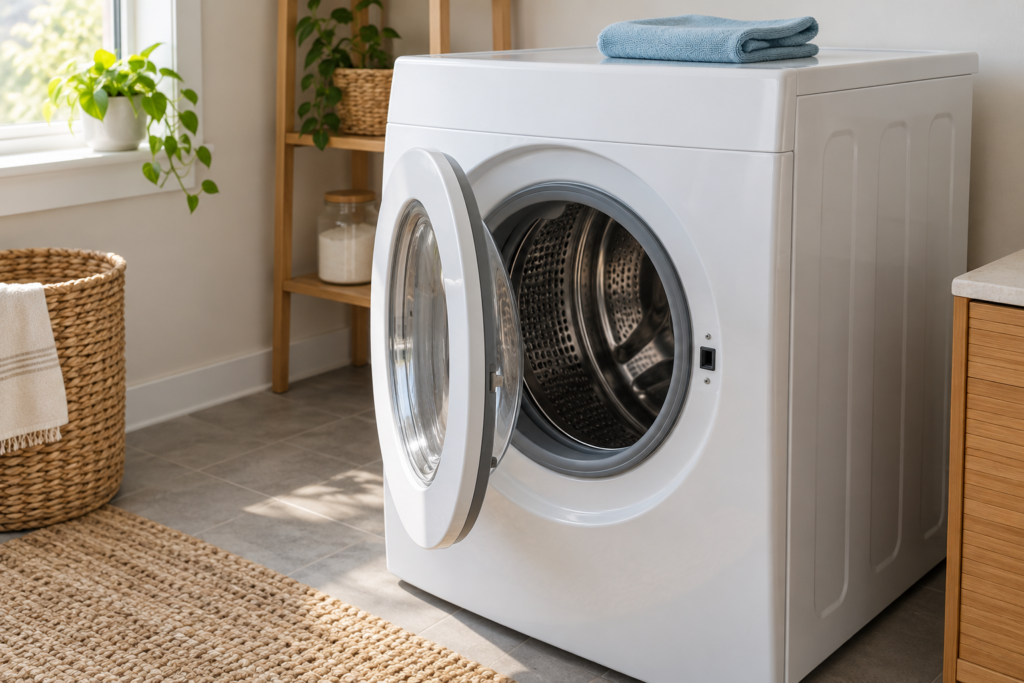
A Neptune is a Maytag front-load washer with a round porthole door and a rubber bellows door seal, bought between April 1, 1997 and August 9, 2004. The model numbers begin with MAH, such as the MAH3000, MAH4000, MAH5000 and MAH6700 series, and the stackable laundry centers carry numbers beginning with MLE or MDE.
The label is on the door jamb inside the loading opening, so you can check in a few seconds. If your washer is a later front-load model, the same habits still help, and our Maytag washer maintenance guide covers the wider schedule, including the quarterly inlet screen check and the annual hose and belt inspection.
How Do You Clean Mold From a Neptune Door Gasket?
Fold the gasket back, look and smell for black or gray colonies, and wipe them with a diluted bleach solution and a microfiber cloth. The mixture on our notice is 1 tablespoon of bleach per quart of water. Then run a hot-water cleaning cycle to flush what you loosened.
- Pull the gasket back by hand and check the whole ring, especially the lowest fold.
- Wipe the folds and the glass with the diluted bleach solution on a microfiber cloth.
- Run a hot-water cleaning cycle with a washer-cleaning tablet or 1 cup of white vinegar added directly to the drum.
- Dry the gasket with a clean cloth and leave the door open until everything is dry.
- Repeat monthly, or sooner if the odor returns.
Never mix bleach and vinegar, and run the two treatments as separate steps with a good rinse between them. If the smell comes back within a day of a thorough cleaning, the mold has probably worked into the rubber itself.
Why the Detergent You Use Matters
It matters a great deal. Excess suds leave residue that feeds mold, so the notice advises switching to HE low-sudsing detergent and using no more than the recommended amount. More detergent does not mean cleaner clothes, and in a low-water washer it means a film left on the drum and the seal.
A suds-related code is often the first sign that you are overdoing it, and our Maytag washer SD page explains what the machine is telling you. A musty smell with no code at all is the other signal, since residue trapped in the gasket folds and the outer tub produces it without any fault being logged.
A Simple Weekly Habit List
Most of the work is habit rather than effort, and a few small routines keep the seal dry between the monthly cleanings. Maytag calls its cleaning program the "Clean Washer" cycle, and the HE detergent notice recommends running it monthly with an affresh washer cleaner tablet or 1 cup of white vinegar.
- Prop the door open as soon as you unload, and leave the dispenser drawer slightly open as well.
- Take wet laundry out promptly, since damp clothes left in the drum keep the humidity high.
- Wipe the glass and the lowest gasket fold with a dry cloth once a week.
- Check the drum for coins and small objects, which can tear the seal or block the drain.
When Does a Moldy Door Gasket Need Replacing?
When the mold has penetrated the gasket material itself, because cleaning removes surface growth and nothing more. A seal that stays stained, smells after a thorough cleaning, or shows cracks or tears should be replaced promptly, and the notice lists a part number, 22003483 or equivalent, as widely available from appliance parts suppliers.
- Black stains that do not wipe off: the rubber has absorbed the growth.
- A smell that returns within a day: the source is in the seal, not on its surface.
- Cracks or tears in the bottom fold: leaks follow, and water then feeds the problem.
- Persistent standing water in the tub: a latch, drain or control fault is involved, and a technician should look.
Mold on laundry is a health issue as well as a nuisance, especially for people with allergies or asthma, and the notice rates the urgency as medium. Do not leave a contaminated seal in service while you decide.
When to Call a Technician
Cleaning, drying and a gasket swap are within reach for many owners. A latch that will not lock, a washer that holds water, or a control that behaves oddly are not. Our Maytag washer repair service looks at the latch, the drain and the controls together, and our Maytag Neptune washer mold advisory carries the full notice.
A diagnostic visit starts from $89, and the final price is confirmed after the on-site diagnosis, with a written estimate before work begins. Book a visit or send us the model number and describe the smell and when it started, and we will take it from there.