 Michael Hardin
Key Takeaways
- Our service page describes the Performa as a legacy top-loader with a simpler transmission-and-agitator platform.
- The common repairs are the agitator coupler, the water-level switch and the transmission seal, and the first two are almost always worth making.
- Weak agitation with a normal spin points at the transmission; a roar only in spin points at the tub bearing.
- Maytag washers are designed to last 10 to 14 years, so age decides how large a repair is worth paying for.
- Ask for the failed part and the washer's age in writing before approving any quote.
The Bottom Line
Repair small parts on a sound Performa, weigh a transmission by age, and replace the washer when a bearing or a tub fault appears on an old machine.
A Maytag Performa washer is, by our service page's description, a legacy top-loader with a simpler transmission-and-agitator platform than the electronic washers sold today. That simplicity is the reason owners ask whether it is worth fixing: the parts that wear are few and well understood, but the machine is old enough that every repair has to be weighed against its age. This guide is about whether the Performa is worth the money; the parent is it worth repairing a Maytag washer guide covers the whole Maytag washer range.
| What fails | Usual verdict | Why |
|---|---|---|
| Agitator coupler or dogs | Repair | Small, contained part on a simple machine |
| Water-level switch | Repair | A sensor, not a sign the washer is finished |
| Transmission seal leak | Weigh by age | Worth it if the machine is otherwise sound |
| Transmission itself | Often borderline | A labor-heavy repair on an old machine |
| Tub bearing or rust through the tub | Lean toward replacing | Structural wear, not a part swap |
What Kind of Washer Is a Performa?
A legacy Maytag top-loader, according to our Maytag washer repair page, which groups the Performa with the Atlantis under older top-load models. The page says these use a simpler transmission-and-agitator platform and names three common repairs: the agitator coupler, the water-level switch and the transmission seal. We do not have a model-by-model list for the Performa, so check the label on your own machine and read its manual before ordering any part.
Because the line is legacy, assume the washer is old. Our guides give Maytag washers a design life of 10 to 14 years and lean toward replacement from about eleven. A Performa that has already passed that range is not necessarily finished, but it has used up most of the margin that makes a repair a safe bet.
- Know the age — the serial and the label give the date; guessing is how repairs go wrong.
- Know the platform — a top-loader with a transmission, not a direct-drive front-loader.
- Know the symptom — weak agitation, a leak, a noise in spin and a fill problem each point at a different part.
Which Performa Repairs Are Worth Making?
The small ones, almost always, and the large ones only on a sound machine. The three repairs our service page names are modest parts on a simple platform, and none of them says anything about the rest of the washer. A worn agitator coupler is the classic example: the motor runs, the drum spins and the agitator does nothing.
- Agitator coupler — worth fixing at almost any age if the washer is otherwise tight.
- Water-level switch — worth fixing; a faulty one can cause overfill or a cycle that will not advance.
- Transmission seal — worth it if the leak is the only problem and the machine is not far past eleven years.
- Transmission replacement — worth a pause; our transmission repair cost guide calls it a labor-heavier job because reaching it means removing the drum.
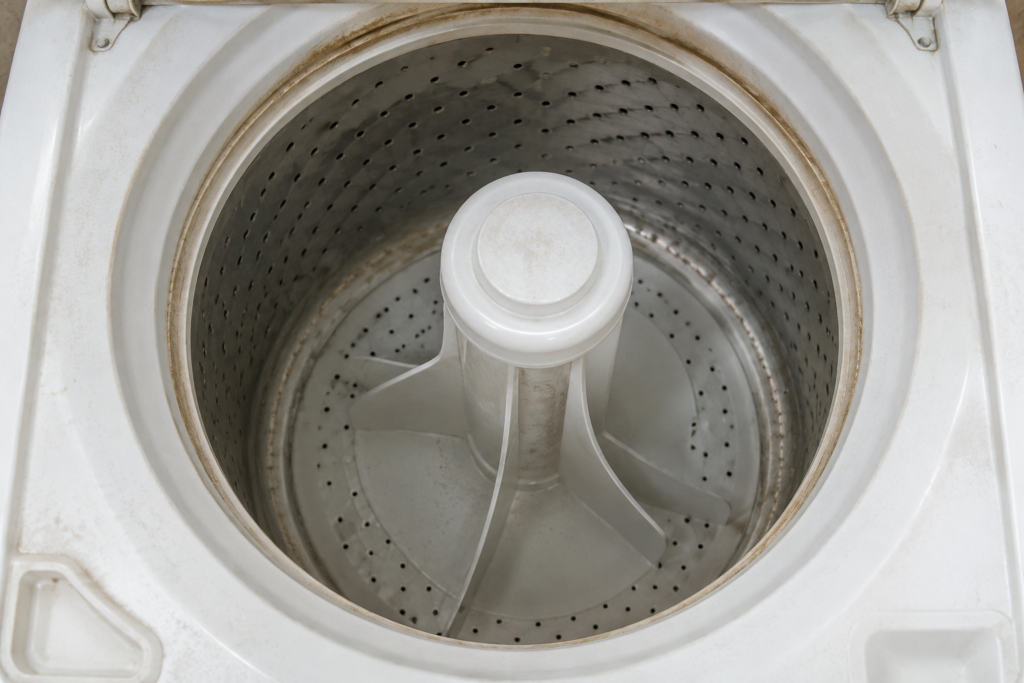
Is a Maytag Performa Washer Worth Fixing at Its Age?
Yes if the repair is small and the rest of the machine is tight, and rarely if you are paying for a transmission on a washer past fifteen. Our parent guide gives a clear age table: repair almost always in the first years, evaluate carefully at eight to ten, replace unless the repair is very minor at eleven to fourteen, and replace past fifteen. A legacy platform sits at the far end of that table, so most Performa decisions are about whether the repair is minor.
The transmission guide adds a helpful test: weak agitation with a normal spin points at the transmission, while a roar only during spin points at the tub bearing instead. Those are different jobs with different costs, and mixing them up leads to the wrong estimate. Ask for the diagnosis in writing and ask how old the technician thinks the washer is.
- Weak agitation, normal spin — transmission or its clutch; weigh by age.
- Roar in spin only — tub bearing; usually not worth it on an old washer.
- Drum will not turn, motor hums — belt or pump; a lower-cost repair.
- Agitator loose or idle — coupler; the cheapest of the group.
Note, too, that a verdict can change with the household. A washer that serves a family every day is worth more repair money than one used for the occasional load, because the cost of waiting weeks for a replacement is a real one. If the Performa is a second machine in a basement or a rental, set the bar lower and replace sooner. The numbers matter, but so does how much you rely on the machine, and no table in a guide knows that.
What About Parts and Codes?
Older Maytag washers report faults with short codes, and our site documents two legacy ones: washer LF for a long fill and washer F21 for a long drain on the legacy platform. Whether your Performa shows either depends on its control, so treat them as examples and check the manual. Our service page says parts for the oldest Neptune models are on managed availability, and it is sensible to expect a similar check on any legacy machine before the repair is booked.
Before you pay, do the free checks. Clear the drain filter and hoses, confirm both fill valves are open and look at the load: a washer that agitates weakly because of an oversized load is not broken. Our washer repair or replace guide covers the decision for the machine as a whole.
Questions to Ask the Technician
A legacy machine deserves a more careful quote than a new one, because the repair may be sound while the washer is not. The questions below turn a vague estimate into a decision.
- Which part failed, and how was it tested? — a named part with a test is real evidence.
- Is the part in stock or on special order? — a long wait on a household washer is a cost of its own.
- What else is worn? — ask about the tub, the transmission seal and the lid area while the cabinet is open.
- What is the warranty on the repair? — a repaired part with some cover changes the risk.
How to Decide
Write down the age, the symptom and the quote, then check three things: whether the repair is one of the small ones, whether the washer has needed other repairs recently and whether the quote names the failed part. A machine that needs a second repair within eighteen months is showing a pattern, and our guides treat that as a reason to compare against a new washer.
The final price is confirmed after the on-site diagnosis, with a written estimate before any work begins. You can book a visit or send us the model number and what the washer does before the technician arrives.