 Michael Hardin
Key Takeaways
- A lid switch replacement on a Maytag top-load washer starts from $145 in total, with the part from $45.
- A cracked lid strike is a cheaper, owner-fixable cause and should be checked before the switch.
- A power-cycle reset clears F5E1 at boot but the code returns if the switch or strike is really worn.
- Never bypass the lid switch; it stops the drum from spinning with the lid open.
- The final price is confirmed after on-site diagnosis, with a written estimate before work begins.
The Bottom Line
Check the lid strike and try a reset before paying for a switch. If F5E1 returns, a switch replacement starts from $145 in total.
A Maytag top-load washer that shows F5E1, refuses to start or stops mid-wash is telling you it cannot tell whether the lid is closed. The part behind that message is small, it sits under the top panel, and replacing it is one of the cheaper washer repairs. This guide sets out what Maytag washer lid switch replacement cost looks like on a Bravos, Bravos XL, Centennial or MVWB top-loader, and which cheaper causes to rule out first.
| Item | What it involves | Cost |
|---|---|---|
| Reset and lid alignment | Unplug for 60 seconds, close the lid firmly, check the strike | No charge if you do it |
| Lid strike | The plastic tab on the lid that enters the switch port | Part from $20 |
| Lid switch assembly | New switch fitted by a technician, parts from $45 | from $145 total |
| Wiring harness at the top panel | Damaged or chafed lead repaired or replaced | Quoted after diagnosis |
| Main control board | Only when the switch circuit tests good | from $235 total |
How Much Does It Cost to Replace a Maytag Washer Lid Switch?
A lid switch replacement on a Maytag top-load washer starts from $145 in total, with the part from $45 and labor from $85, according to the F5E1 row of our Maytag washer repair cost guide. That puts it level with a drain pump and below a bearing or a control board. The cost guide describes a lid swap as about thirty minutes of labor on a straightforward part.
Treat that figure as a starting point. A visit that finds only a worn switch sits near it, while a visit that also involves a cracked strike, a damaged harness or a longer diagnosis sits higher. The final price is confirmed after on-site diagnosis, and you should receive a written estimate before any work begins.
What Moves the Price
Three things decide whether a lid switch visit stays near the floor, and you can check two of them yourself.
- Whether the strike is cracked — the F5E1 page lists a worn or misaligned lid strike as the first cause and describes it as a part most owners can swap with a screwdriver.
- Whether the harness is damaged — a lead broken or chafed where it passes through the top panel is the cause that needs a professional.
- Which washer you have — the page names Bravos XL, Bravos, Centennial and MVWB top-loaders, and says a Neptune or MVWB older than ten years with several intermittent faults is a reason to call.
A diagnostic visit starts from $89 and is often applied toward the repair if you go ahead, so ask when you book. If you decline the repair, you pay the diagnostic fee only.
Labor is the smaller part of this bill. The cost guide calls a lid swap about thirty minutes of work on a straightforward part, so a quote far above the table in this guide deserves a question about what else is included.
- Which part tested bad? — the strike, the switch or the harness should be named.
- Was the reset tried? — a power cycle costs nothing and is part of a sound diagnosis.
- Is the diagnostic fee credited? — ask whether it comes off the repair total.
- Is the washer old with other faults? — then compare the quote against the machine's age first.
Is It the Lid Switch or Just the Lid Strike?
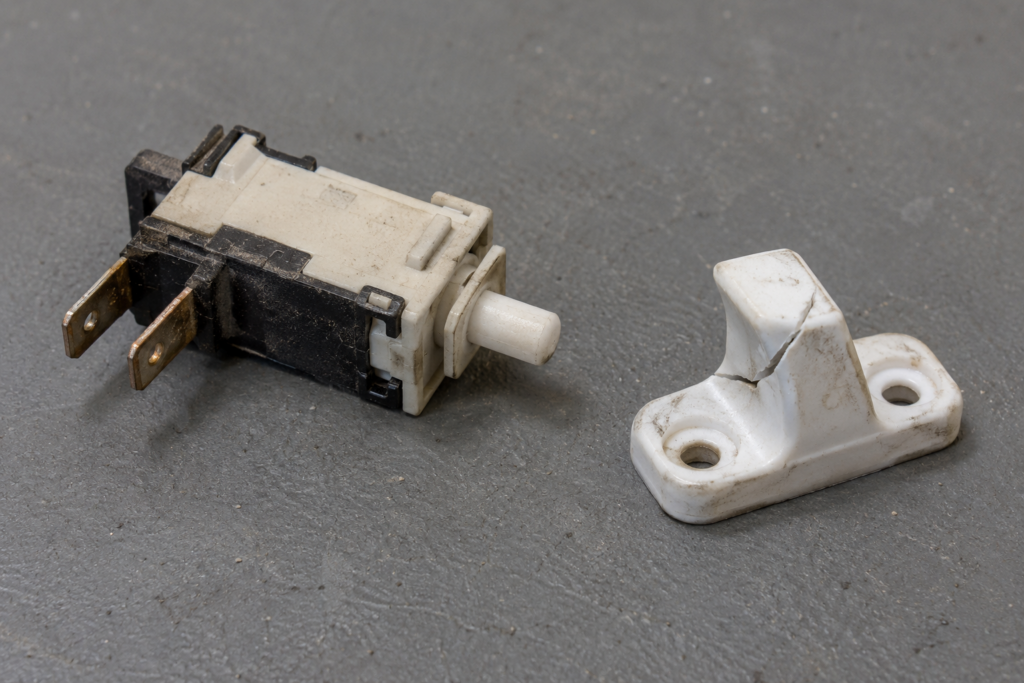
Look at the strike before you buy a switch, because it is the cheaper part and it fails first. Open the lid and find the small plastic tab on its underside that enters the switch port on the top panel. If the tab is cracked, bent or missing, that is the fault, and our washer F5E1 page describes the swap as a screwdriver job.
The same page offers a simple test. Close the lid firmly several times and listen for a click from the switch, then start a Rinse and Spin cycle. If the cycle starts normally after a firm close, the switch is marginal and near the end of its life, and an intermittent F5E1 that responds to a slam is the classic sign.
- Write down what the washer does — refuses to start, pauses mid-wash or shows the lock light dark.
- Unplug the washer for 60 seconds and plug it back in; the code clears at boot but returns when the control checks the lid.
- Inspect the strike for cracks, bends or missing pieces.
- Close the lid three or four times and listen for the click each time.
- Check that the lid sits flush with no gap or obstruction and does not feel loose in the frame.
Do not bypass the switch. The F5E1 page says the switch is a safety lockout that stops the drum from spinning with the lid open, and a washer that cannot sense the lid reliably should not be run.
Can F5E1 Be Cleared Without a Part?
Sometimes, for a while. Our repair cost guide notes that this error is often resolved without a part through the documented power-cycle reset, and the F5E1 page says the code returns as soon as the control queries the switch if the cause is real. A reset that holds for weeks was probably a one-off glitch, while a reset that fails the same day is a worn part.
That is the useful test before you approve a quote. A technician who names the strike, the switch or the harness has found something. One who replaces a control board for a lid error should show the test that ruled out the switch circuit first.
The symptom tells you which of the three is likely. A lid that reads as open even after a hard slam, as the F5E1 page describes on Bravos models, points at the strike or the switch. A cycle that pauses in the middle of a wash points at a signal that drops out, which can be a worn switch or a chafed lead. A lock light that stays dark on a Bravos XL with an electronic lid lock points at the lock circuit. Describe what you see to the technician in those terms and the visit gets shorter.
When Is Replacing the Washer the Cheaper Answer?
Rarely for a lid switch alone. Our guides give Maytag washers a design life of 10 to 14 years and use the 50 percent rule: a repair that costs more than half of a comparable new washer leans toward replacement. A lid switch sits far below that line, so the age and condition of the rest of the machine decide, not the switch.
Reconsider if the washer is old and has other faults, such as a noisy bearing or a leaking tub, or if the lid fault returns after a new switch. Our washer repair or replace guide covers that decision, and the Maytag washer repair page lists what a visit includes.
You can book a visit or send us the model number and what the washer does when you press Start so the technician arrives with the right part.